Free, no account
Check an IBAN before you pay it.
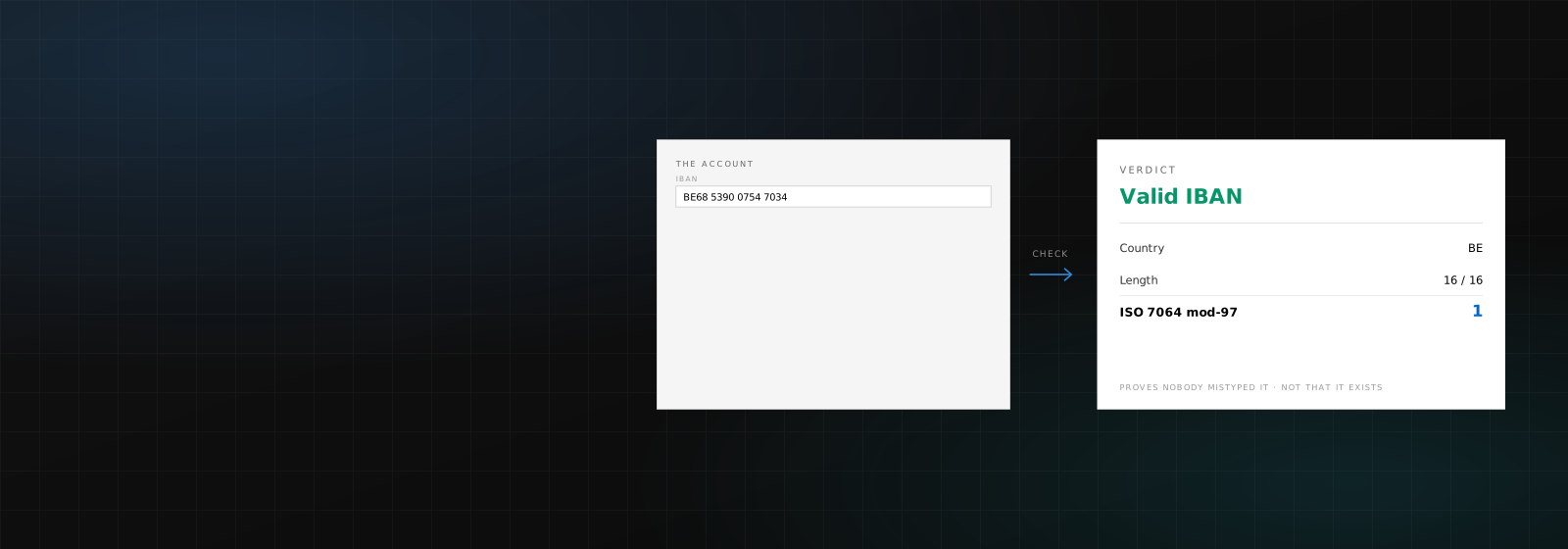
Paste an IBAN. One wrong digit and the checksum fails.
Paste an IBAN
Spaces are fine. Paste it as it appears on the invoice.
The checksum proves nobody mistyped it. It does not prove the account exists, is open, or belongs to who you think. No offline check can.
Runs in your browser
Nothing you type here is uploaded, logged, or stored. The file is built on your own machine and disappears when you close the tab.
How the check works
An IBAN carries its own error detection. Move the first four characters to the end, turn letters into numbers, and the whole thing modulo 97 has to equal 1. That is ISO 7064, and it catches a single wrong character and almost every transposition, which is exactly how bank details get mistyped.
What it cannot tell you
Whether the account exists, whether it is open, and whether it belongs to who the invoice says. Those need the bank. Treat a valid checksum as "nobody fat-fingered this", not as confirmation you are paying the right person. Invoice fraud usually uses a perfectly valid IBAN.
When to use it
Before the first payment to a new supplier, and again whenever bank details arrive by email with a note about them having changed. That request is the single most common invoice fraud, and a structurally valid IBAN is not evidence of anything except careful typing.
Questions, answered
Is it free?
Yes, and unlimited.
Is the IBAN uploaded?
No. The check is arithmetic and runs in your browser.
Does it give me the BIC?
No. The BIC is not derivable from an IBAN reliably; ask your bank or the supplier.
Can I put it on an invoice?
Yes, the invoice generator has a field for it, and the Peppol tools carry it too.
Wrong answer, or a tool that isn’t here?
Tell us which tool and what you expected. Requests are most of how this list grows, and if the wording here reads wrong, say so.
Your next invoice takes a minute.
Free while in early access. Bring your clients, your currencies, and your logo.