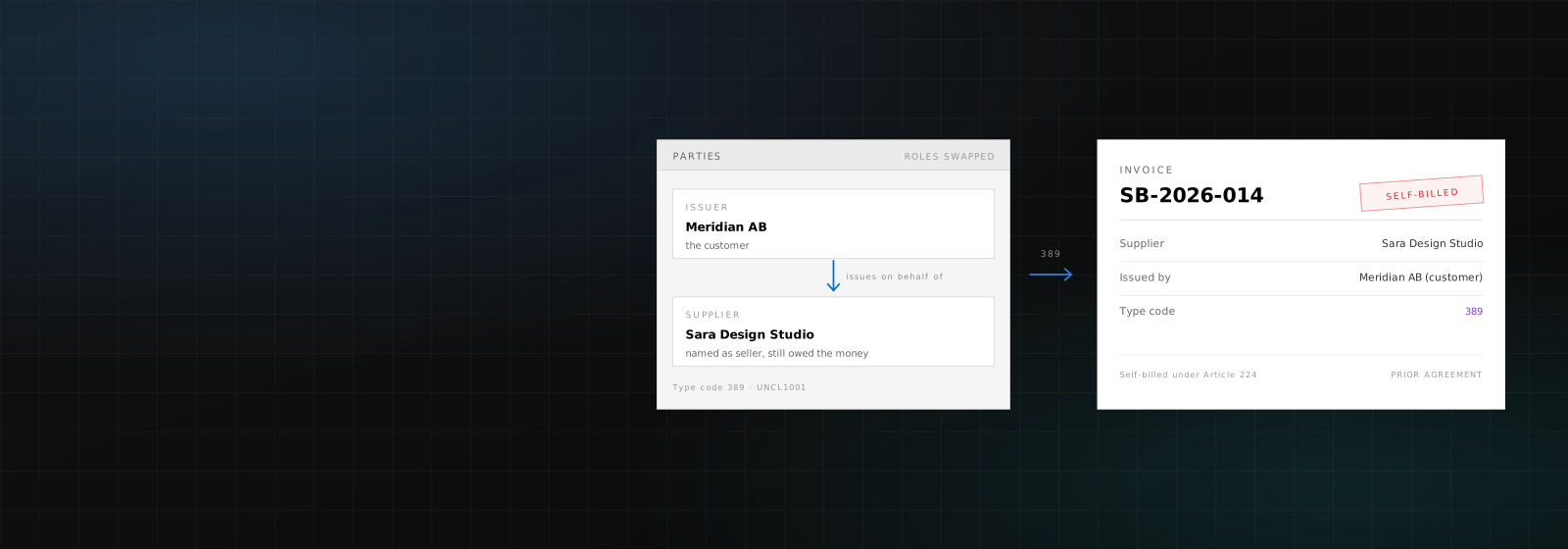
Type code 389 · art. 224
When the customer writes the invoice.
Self-billing, done properly: type code 389 and the statement the law asks for.
Runs in your browser
Nothing you type here is uploaded, logged, or stored. The file is built on your own machine and disappears when you close the tab.
What self-billing is
The customer draws up the invoice for a purchase, in the supplier’s name and on their behalf. It is ordinary in commission and platform arrangements, and in industries where the buyer knows the final quantities before the seller does. The document is still the supplier’s invoice, with their VAT number and their name as seller. It is simply the customer who wrote it.
It only works by prior agreement
Article 224 of the VAT Directive allows self-billing where there is an agreement between the two parties beforehand and a procedure for the supplier to accept each invoice. Get that in writing before the first one goes out. Member states add their own conditions, and an arrangement nobody agreed to is a document the supplier can simply disown.
The type code, and the words
Two things separate a self-billed invoice from an ordinary one. The type code is 389 rather than 380, so software knows what it is looking at. And the invoice itself has to say it was self-billed: the note is where that goes, and the button next to it inserts wording that names the article. The check on the right will not pass until both are right.
What this does not do
It writes one document. It does not hold the agreement, record the supplier’s acceptance, or keep the numbering, and on a self-billed invoice the numbering belongs to whichever party the agreement says, which is a decision a tool cannot make for you. Nor does it send: Peppol delivery goes through a registered Access Point.
Questions, answered
Is it free?
Yes, and nothing is uploaded or stored.
Who is the seller on the document?
The supplier, always. You fill their details in as the seller and your own as the buyer, even though you are the one issuing it. The invoice records the sale, not who typed it.
Whose VAT number matters?
Both, and the supplier’s especially: it is what makes the invoice deductible. The check insists on it, and on both numbers carrying their country prefix.
Will an Access Point accept type code 389?
It is in the Peppol BIS Billing 3.0 code list, so yes in principle. Some receivers only configure 380 and 381, so it is worth agreeing with your supplier before the first one.
Wrong answer, or a tool that isn’t here?
Tell us which tool and what you expected. Requests are most of how this list grows, and if the wording here reads wrong, say so.
Your next invoice takes a minute.
Free while in early access. Bring your clients, your currencies, and your logo.