Free, no account
A QR your client scans to pay you.
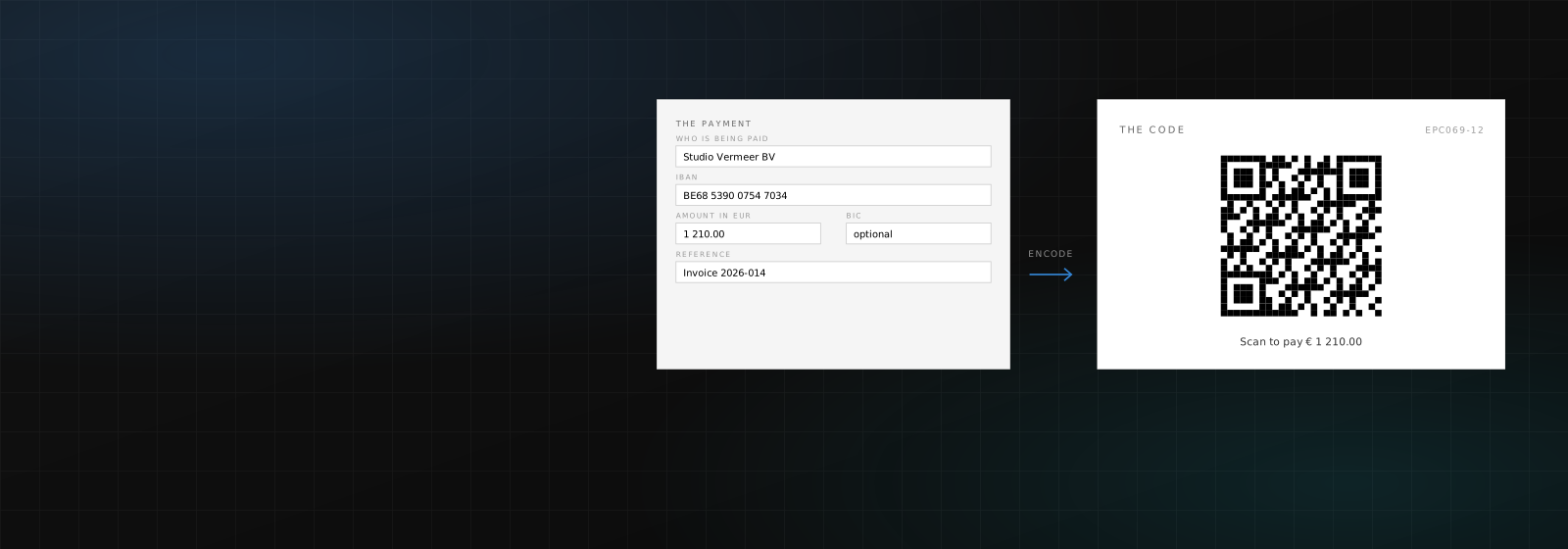
Payee, IBAN, amount, reference. Out comes an EPC code any EU banking app reads.
The code
- Payload bytes
- 15 / 331
Fill in a payee and a valid IBAN and the code appears here.
- The payee name is required.
- An IBAN is required.
EPC codes carry euro only, and the whole payload is capped at 331 bytes. Both are the standard’s limits, not ours.
Runs in your browser
Nothing you type here is uploaded, logged, or stored. The file is built on your own machine and disappears when you close the tab.
What it is
An EPC QR code, also sold as a GiroCode. Scanning it in a European banking app pre-fills a SEPA transfer with your name, IBAN, amount and reference. The payer confirms and it is done, with nothing retyped, which is where wrong digits and missing references come from.
Where to put it
On the invoice, near the payment details, and in the reminder email. It costs nothing and removes the step where someone has to copy an IBAN by hand. Print it at 2cm or more; below that, phone cameras start struggling.
What the standard allows
Euro only, and the whole payload is capped at 331 bytes, both the standard’s rules, not ours. Version 002 makes the BIC optional inside the EEA; 001 still requires it. Use a payer reference or a structured RF reference, never both.
Questions, answered
Is it free?
Yes. No account, no watermark, nothing stored.
Which apps read it?
Most European banking apps, and any generic QR scanner will at least show the payload.
Can I use another currency?
No. The EPC standard is euro only. For other currencies put the details on the invoice as usual.
Is the QR safe to share?
It carries only what you typed: payee, IBAN, amount, reference. Nothing is uploaded and nothing is tracked.
Wrong answer, or a tool that isn’t here?
Tell us which tool and what you expected. Requests are most of how this list grows, and if the wording here reads wrong, say so.
Your next invoice takes a minute.
Free while in early access. Bring your clients, your currencies, and your logo.