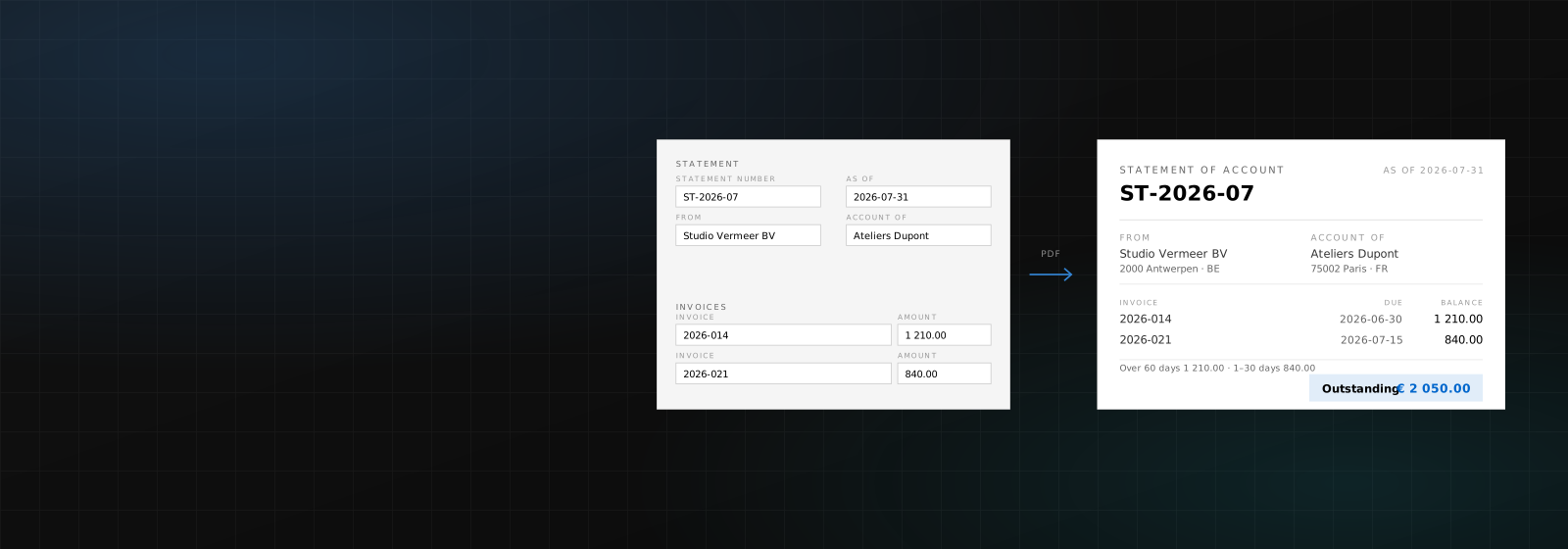
Statement of account
—
- As of
- —
From
—
BE
Account of
—
BE
| Invoice | Due | Amount | Paid | Balance |
|---|---|---|---|---|
| — | €0.00 | €0.00 | €0.00 |
- Invoiced
- €0.00
- Received
- €0.00
- Outstanding
- €0.00
Free, no account
Every open invoice on one page, aged, with the balance at the foot.
Your document
Statement of account
—
From
—
BE
Account of
—
BE
| Invoice | Due | Amount | Paid | Balance |
|---|---|---|---|---|
| — | €0.00 | €0.00 | €0.00 |
Runs in your browser
Nothing you type here is uploaded, logged, or stored. The file is built on your own machine and disappears when you close the tab.
One page listing every invoice for a single customer, what has been paid against each, and the balance. It is not a reminder about one invoice: it is the whole relationship, which is what you send when a customer has three overdue and has been answering about one. It is also what a finance department asks for when they cannot work out what they owe you.
The foot of the statement splits the balance into not yet due, one to thirty days late, thirty-one to sixty, and over sixty. Nobody argues with a total; people do move on a number sitting in the "over 60 days" column, because that one is a statement about them rather than about money. Set the as-of date and the ageing follows from each invoice’s due date.
Monthly, as a habit, to any customer with more than one invoice open, before anything is seriously late. Sent early it reads as bookkeeping; sent only when you are angry it reads as an escalation. If it is already late, the reminder ladder and the late-payment interest calculator are the next two tools along.
You type the invoices in, so it is only as right as what you type: it cannot see your ledger, cannot notice a payment arriving, and will not tell you an invoice is missing from the list. Keeping that list true by itself is the thing an account does.
Yes. No account, no watermark, no limit on rows.
No. There is no server behind this page. The statement is built in your browser and nothing is logged or stored, which matters, because this page names a customer and what they owe.
No. A reminder is about one invoice and asks for payment; a statement is the full picture and asks for agreement on the number. Send the statement first: a good share of the time the answer is that one of the invoices never arrived.
Yes. Every row has a paid column, so a 1,000 invoice with 400 received shows a 600 balance and still ages from the original due date.
Wrong answer, or a tool that isn’t here?
Tell us which tool and what you expected. Requests are most of how this list grows, and if the wording here reads wrong, say so.
Free while in early access. Bring your clients, your currencies, and your logo.